
Condition
Slipped Disc
A slipped disc occurs when the soft inner material of a spinal disc pushes out and presses on nearby nerves, causing pain that can radiate into the arms or legs.
Book a consultation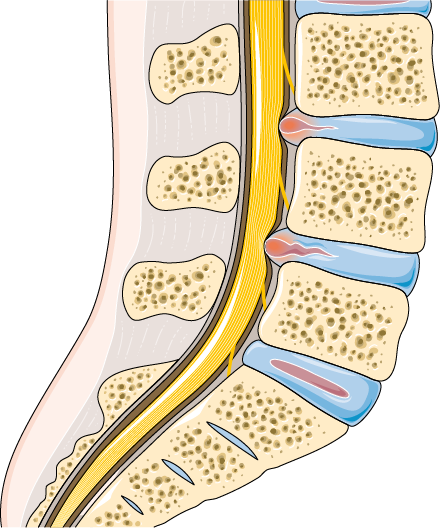
What is a Slipped Disc?
Between each pair of vertebrae sits a disc: a fibrous outer ring (the annulus fibrosus) filled with a gel-like core (the nucleus pulposus). When the outer ring weakens or tears, that gel can push outward and press on the spinal cord or a nearby nerve root. The term “slipped disc” is common, but the disc doesn’t actually slip anywhere: it ruptures or herniates.
This happens most often in the lower back (lumbar spine), though the neck (cervical spine) is also frequently affected. Age-related wear is the most common cause, but sudden lifting with poor posture, a fall, or years of repetitive strain can all trigger it. Discs lose water content and flexibility over time, making them more vulnerable to rupture.
The pressure from herniated disc material on a nerve is what produces most of the symptoms. In the lower back, this pressure is one of the most common causes of sciatica.
Symptoms
- Sharp, burning, or electric-shock pain in the lower back or neck
- Pain that radiates into one leg (from a lumbar disc) or one arm (from a cervical disc)
- Numbness or tingling along the path of the affected nerve
- Muscle weakness in the leg, foot, arm, or hand
- Pain that worsens with sitting, bending forward, or coughing
- In severe cases, difficulty with bladder or bowel control (requires urgent review)
How We Treat It
Most people with a slipped disc don’t need surgery. At GABA, our first goal is to reduce the nerve irritation and inflammation causing your pain. Epidural steroid injections deliver anti-inflammatory medication directly to the affected nerve root, often providing significant relief within days to weeks. For pain with a clear nerve distribution, a targeted nerve block can both confirm the pain source and reduce symptoms. These approaches succeed in the large majority of cases, avoiding surgical risk and recovery time.
When nerve pain persists despite injections, radiofrequency ablation can interrupt the pain signals from the affected structures. Our team will guide you through each option with clear evidence on what to expect. We treat the whole picture: not just the disc finding on your MRI, but the pain pattern that’s actually limiting your life.
How we treat Slipped Disc at GABA
Nerve Blocks
Nerve blocks inject local anaesthetic, with or without steroid, precisely alongside a pain-transmitting nerve to interrupt pain signals and provide diagnostic and therapeutic relief.
Radiofrequency Ablation
Radiofrequency ablation uses heat generated by high-frequency electrical current to interrupt pain signals from specific nerves, providing lasting relief for chronic joint and nerve pain.
Related conditions
Related services









Tell us what's hurting.
One consultation. One coordinated team. A plan built around your case.