
Procedure
Radiofrequency Ablation
Radiofrequency ablation uses heat generated by high-frequency electrical current to interrupt pain signals from specific nerves, providing lasting relief for chronic joint and nerve pain.
Book a consultation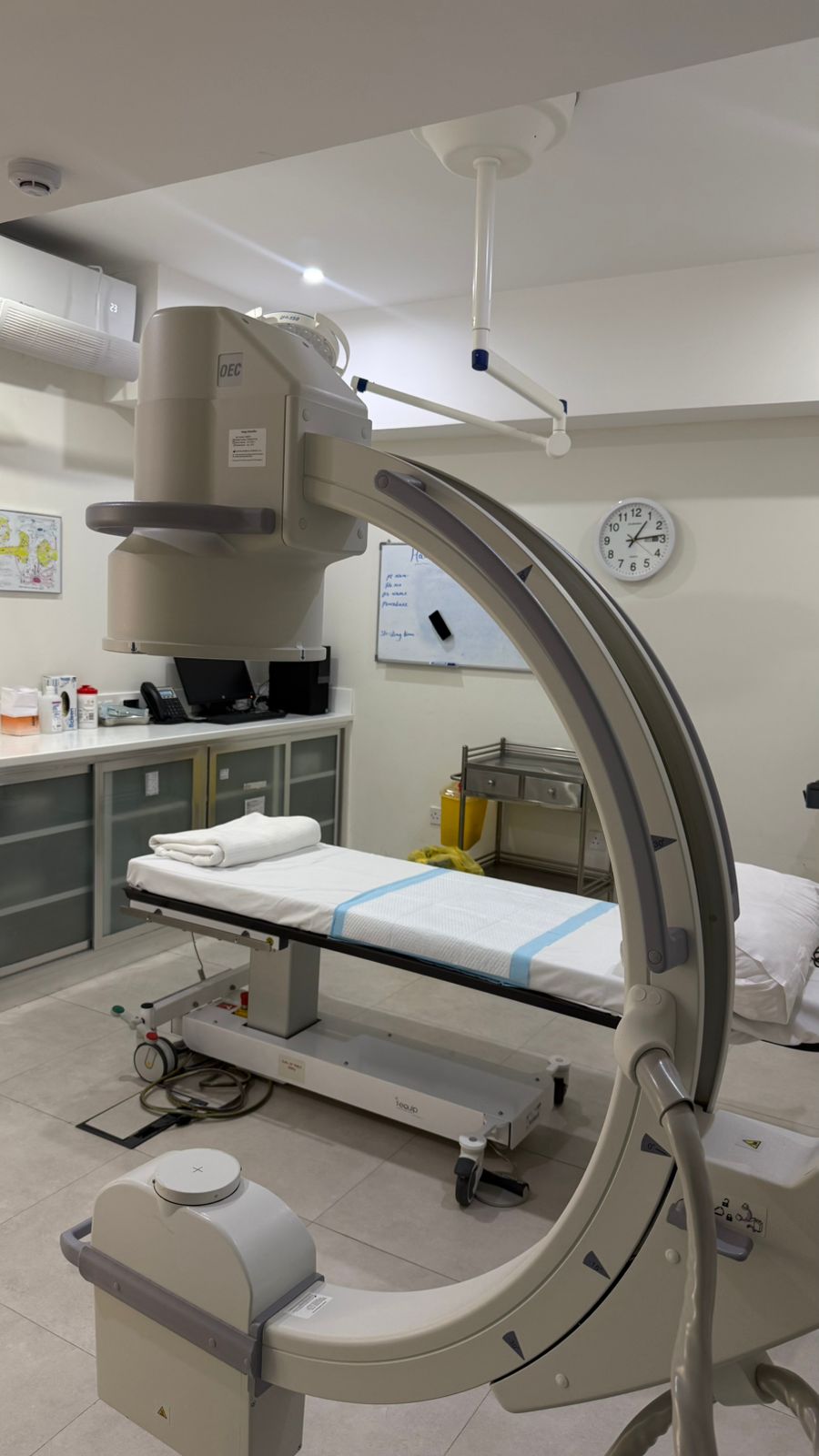
What is Radiofrequency Ablation?
Radiofrequency ablation (RFA) is a minimally invasive, outpatient procedure that uses heat to selectively disable the nerve fibres carrying pain signals to the brain. A thin needle electrode is placed precisely next to the target nerve under image guidance. When the radiofrequency current passes through the electrode tip, the surrounding tissue heats to between 65 and 90°C, creating a small, controlled lesion that interrupts pain transmission without damaging surrounding structures.
We use three variations depending on the nerve and the clinical picture. Conventional RFA delivers continuous heat at high temperature and is suited to medial branch nerves supplying facet joints. Pulsed RFA operates at 42°C in short bursts, which modulates the nerve without destroying it, making it preferable near sensory or motor nerves. Cooled RFA circulates water through the electrode to allow a larger lesion at moderate temperature, which improves results for structures like the sacroiliac joint where the target zone is wider.
What conditions does it treat?
RFA works best for pain that has a clearly identified nerve source. We use it for facet joint pain in the neck and lumbar spine, sacroiliac joint pain, and chronic knee pain where medial genicular nerves are targeted. It is also effective for trigeminal neuralgia and, in combination with other approaches, for occipital neuralgia and cervicogenic headache. Before proceeding with ablation, we confirm the pain source with a diagnostic nerve block: if blocking the nerve temporarily abolishes the pain, RFA is likely to provide sustained relief.
What to expect
Before: You will have a diagnostic block at least once, sometimes twice, to confirm the target nerve. Tell us about any blood thinners you take, as these need to be paused in advance. No special fasting is required for most RFA procedures.
During: You lie on the procedure table awake and comfortable. Local anaesthetic numbs the skin and deeper tissues. Sensory and motor stimulation tests confirm the needle is correctly placed before ablation begins. Each lesion takes about 90 seconds; a full session typically lasts 30 to 60 minutes depending on how many levels are treated.
After: Most patients walk out the same day and are monitored briefly before discharge. Some soreness at the injection site is normal for up to two weeks. Pain relief usually begins within 10 days to three weeks as the treated nerve fibres fully stop transmitting. Relief commonly lasts 9 months to 2 years; if the nerve regenerates and pain returns, the procedure can be repeated.
Conditions this treats
Related services









Tell us what's hurting.
One consultation. One coordinated team. A plan built around your case.