
Condition
Failed Back Surgery Syndrome
Failed back surgery syndrome describes persistent or new spinal pain after surgery, and is more common than most patients are told before going into theatre.
Book a consultation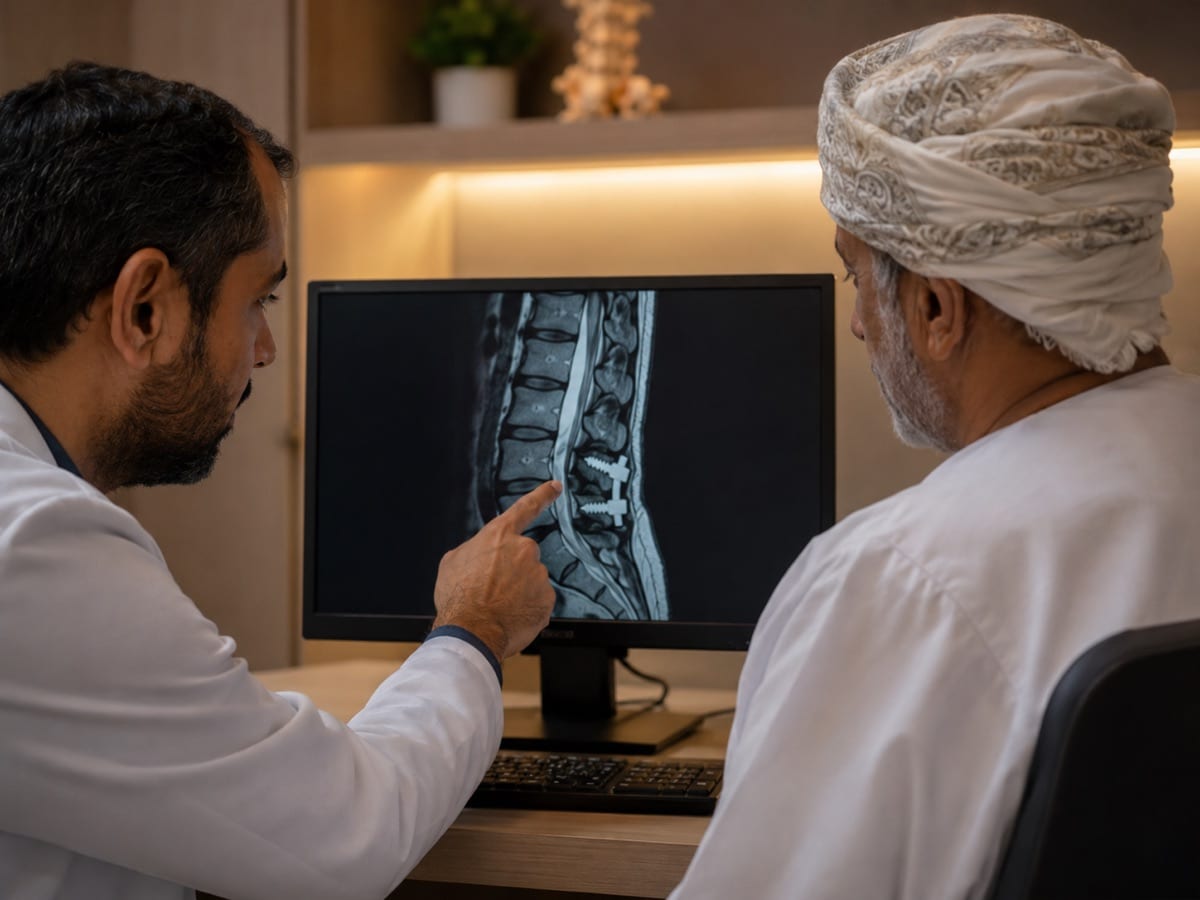
What is Failed Back Surgery Syndrome?
Failed back surgery syndrome (FBSS) refers to persistent or new pain following spinal surgery, where the expected relief did not materialise or did not last. The name is somewhat misleading: in many cases the surgery was technically successful, but the pain either never resolved or returned over time. This reflects how complex spinal pain is: removing a disc prolapse or decompressing a nerve doesn’t automatically fix pain that has developed other drivers.
FBSS falls into three broad patterns. In the first, the same pain that was present before surgery continues unchanged, suggesting the operated level was not actually the primary pain source. A herniated disc on an MRI is not necessarily the disc causing the pain. In the second pattern, the original radicular (nerve) pain improved but new axial back pain emerged, often from adjacent segment disease, epidural scar tissue, or muscle disruption during the surgery itself. In the third pattern, an entirely new pain syndrome develops later, unrelated to the original problem.
The reported rates of persistent pain after spinal surgery are higher than many patients expect: studies cite reoperation rates of 4 to 15% for discectomy, and significant residual pain in a meaningful proportion of all spinal surgery patients. FBSS is not rare, and it is treatable.
Symptoms
- Ongoing lower back pain similar to what was present before surgery
- New or returning leg pain (radiculopathy) after an initial period of improvement
- Deep aching, burning, or diffuse pain around the surgical site
- Hypersensitivity of the skin over the operated area
- Reduced walking tolerance or activity capacity despite surgery
- Pain that changes character or spreads to new areas over time
How We Treat It
Post-surgical pain is often multi-factorial, and the first step is careful diagnostic work to identify what is actually driving it now. Diagnostic nerve blocks and medial branch blocks are particularly valuable here: they cut through the noise of complex post-surgical imaging and tell us which structures are currently generating pain. This matters because treating the wrong target wastes time and delays relief.
Once the pain sources are identified, we use a combination of targeted nerve blocks, radiofrequency ablation of confirmed pain generators, and PRP therapy to address residual nerve or soft tissue damage in the surgical field. Our approach is non-surgical: we are not trying to revise or redo what was done before, but to manage the pain that remains using the most effective evidence-based interventional tools available. Many patients with FBSS achieve significant, lasting improvement with the right diagnostic approach and targeted treatment.
How we treat Failed Back Surgery Syndrome at GABA
Nerve Blocks
Nerve blocks inject local anaesthetic, with or without steroid, precisely alongside a pain-transmitting nerve to interrupt pain signals and provide diagnostic and therapeutic relief.
PRP Therapy
PRP therapy concentrates growth factors from your own blood and injects them into damaged tendons, joints, or soft tissue to accelerate healing and reduce pain.
Radiofrequency Ablation
Radiofrequency ablation uses heat generated by high-frequency electrical current to interrupt pain signals from specific nerves, providing lasting relief for chronic joint and nerve pain.
Related conditions
Related services









Tell us what's hurting.
One consultation. One coordinated team. A plan built around your case.