
Condition
Discogenic Back Pain
Discogenic back pain is lower back pain that comes from the intervertebral disc itself, caused by internal disc degeneration rather than nerve compression.
Book a consultation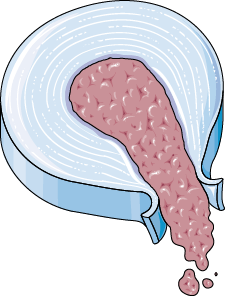
What is Discogenic Back Pain?
Discogenic back pain is one of the most common causes of chronic lower back pain. It comes from the intervertebral disc itself, the cushion that sits between two vertebrae and acts as a shock absorber. The pain is generated inside the disc, not by a fragment pressing on a nerve.
With age and load, the outer ring of the disc (the annulus fibrosus) develops small cracks. The gel-like core can seep into these cracks and irritate the nerve endings in the disc wall. A degenerating disc also releases inflammatory chemicals that sensitise those nerves, which is why the pain can be persistent.
This is different from sciatica. Discogenic pain usually stays in the back and does not shoot down the leg, because the disc is the source rather than a compressed nerve root. Prolonged sitting, repeated bending and lifting, smoking, and a genetic tendency all raise the risk.
Symptoms
- Deep, aching lower back pain that is hard to pinpoint
- Pain that worsens with sitting, bending, twisting, or lifting
- Pain on coughing or sneezing
- Relief when standing up, walking, or changing position
- Pain that does not typically radiate below the buttock
- Stiffness and muscle spasm around the lower back
How We Treat It
We start by confirming the disc is genuinely the pain source, because imaging changes are common and do not always cause pain. Where inflammation around the disc and nerve roots is driving the pain, we use epidural steroid injections under image guidance to settle it, which usually opens a window for rehabilitation within one to two weeks. Diagnostic nerve blocks help us separate disc pain from facet joint or nerve root pain before we commit to a plan.
When the pain is confirmed and keeps returning despite injections, radiofrequency ablation can interrupt the pain signal for longer-lasting relief. We pair these procedures with a structured exercise programme to strengthen the muscles that support the spine and reduce the load on the affected disc. The aim is a clear diagnosis first, then the least invasive treatment that actually works for you.
How we treat Discogenic Back Pain at GABA
Nerve Blocks
Nerve blocks inject local anaesthetic, with or without steroid, precisely alongside a pain-transmitting nerve to interrupt pain signals and provide diagnostic and therapeutic relief.
Radiofrequency Ablation
Radiofrequency ablation uses heat generated by high-frequency electrical current to interrupt pain signals from specific nerves, providing lasting relief for chronic joint and nerve pain.
Related conditions
Related services









Tell us what's hurting.
One consultation. One coordinated team. A plan built around your case.