
Procedure
Steroid Injections
Steroid injections deliver a powerful anti-inflammatory directly to the pain source, relieving nerve compression, joint inflammation, and soft tissue irritation.
Book a consultation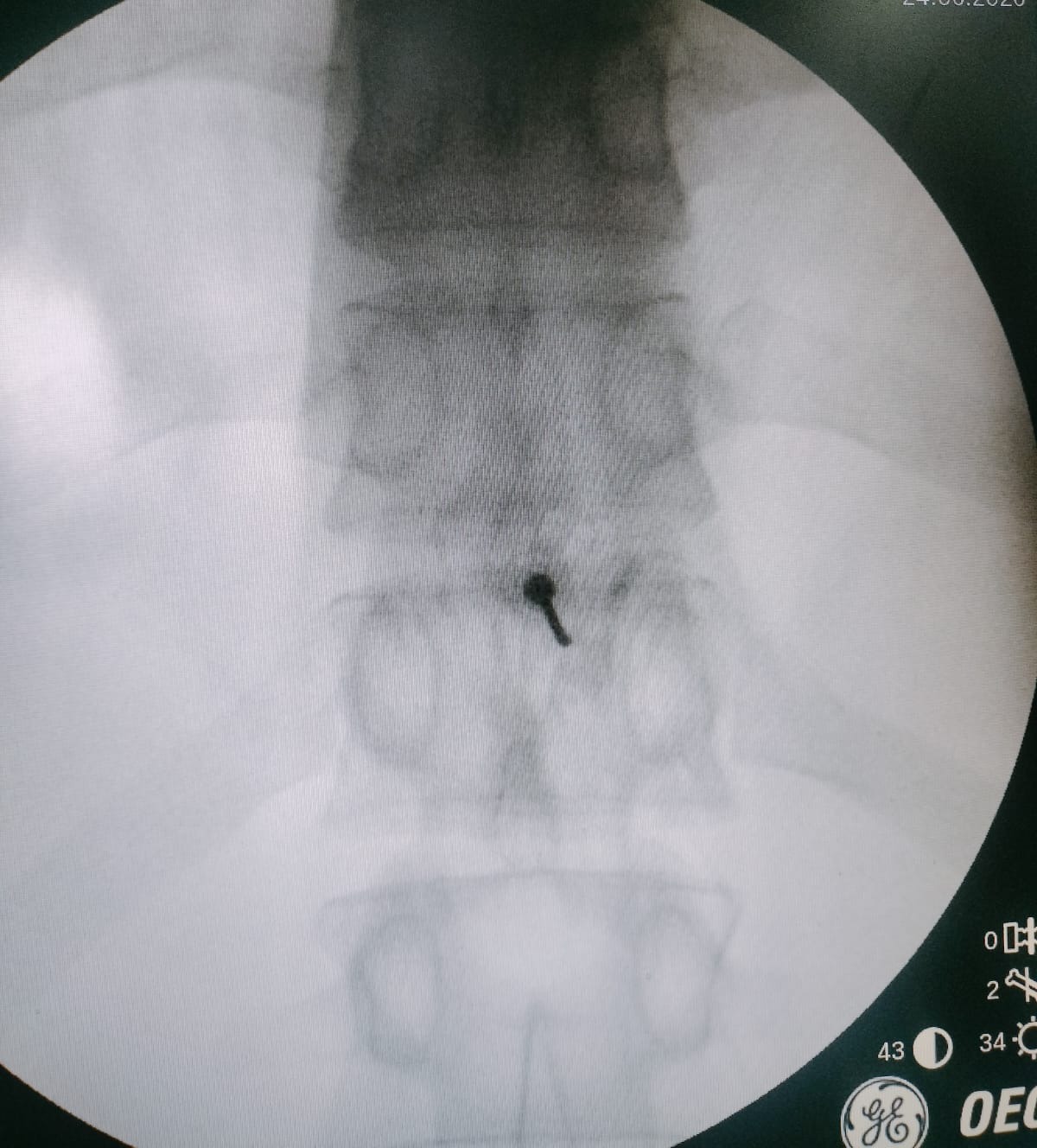
What is a Steroid Injection?
A steroid injection delivers a corticosteroid, typically triamcinolone or methylprednisolone, precisely to the site of inflammation. Corticosteroids are potent inhibitors of the inflammatory cascade: they suppress the prostaglandins, cytokines, and immune cell activity that cause tissue swelling, heat, and sensitisation of local pain receptors. When delivered locally rather than systemically, a much smaller dose achieves a concentrated effect at the target, minimising the systemic effects that concern patients about steroid tablets.
The most common application in spine pain is the epidural steroid injection, which places the medication in the epidural space between the bony canal and the dural sac. When a disc herniation or spinal stenosis is compressing or chemically irritating a nerve root, reducing the local inflammatory response reduces nerve swelling and pain. We use fluoroscopic guidance and confirm epidural spread with contrast dye before injecting. For joint and soft tissue targets, ultrasound guidance confirms placement.
What conditions does it treat?
Epidural steroid injection is highly effective for sciatica caused by disc herniation (success rates above 85% for acute disc compression) and for lumbar spinal stenosis causing leg pain. Facet joint steroid injections treat facet-mediated back and neck pain. Shoulder injections benefit rotator cuff tendinitis, subacromial bursitis, and frozen shoulder at the inflammatory stage. Carpal tunnel syndrome responds well to a local steroid injection into the carpal tunnel, reducing median nerve swelling.
What to expect
Before: Tell us about any blood thinners, diabetes (steroid can temporarily raise blood sugar), and any previous reactions to steroid injections. Blood thinners are usually paused for a short period before the procedure.
During: For epidural injections, you lie face down on the procedure table. The skin is cleaned, local anaesthetic numbs the deeper tissue, and under fluoroscopic guidance a needle is placed in the epidural space. Contrast confirms position, then the steroid-anaesthetic mixture is injected. The procedure takes 20 to 30 minutes. Peripheral joint injections under ultrasound take 10 to 15 minutes.
After: Some patients notice a pain flare for 24 to 48 hours as the local anaesthetic wears off before the steroid takes effect. Rest lightly for the first day. Relief typically begins within 3 to 5 days and can last 6 weeks to 6 months depending on the condition and individual. We generally limit steroid injections to two to three per year at any single site to avoid tissue effects with repeated use.
Conditions this treats
Related services









Tell us what's hurting.
One consultation. One coordinated team. A plan built around your case.