
Condition
Sciatica
Sciatica is nerve pain that travels from the lower back through the buttock and down one leg, caused by irritation or compression of the sciatic nerve.
Book a consultation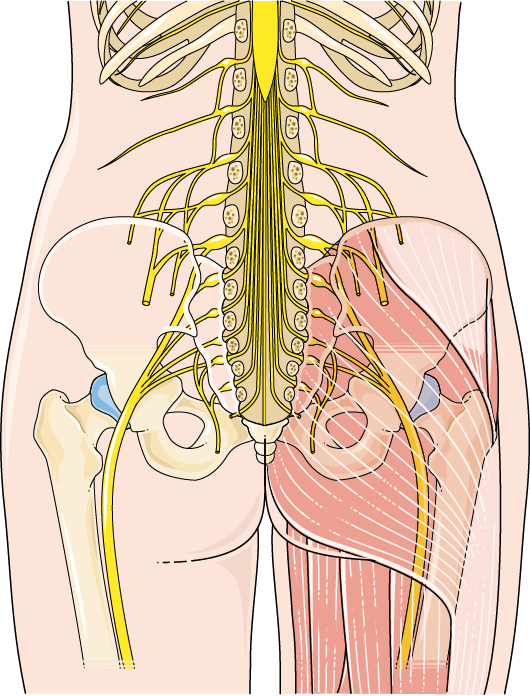
What is Sciatica?
Sciatica is not a diagnosis in itself: it is a symptom pattern. The sciatic nerve is the longest nerve in the body, running from the lower spine through the buttock and down the back of each leg to the foot. When this nerve is compressed or irritated at its root, pain follows its path, sometimes all the way to the toes.
The most common cause is a lumbar disc herniation at the L4-L5 or L5-S1 level pressing directly on the nerve root. Other causes include lumbar spinal stenosis (narrowing of the spinal canal), piriformis syndrome (a muscle in the buttock compressing the nerve), sacroiliac joint dysfunction, or facet joint arthropathy. Identifying the correct source matters because treatment differs depending on the cause.
Sciatica affects one side at a time in most cases. The pain can vary from a dull ache to a sharp, shooting sensation that makes sitting or walking difficult. For most people it resolves with proper management; a smaller number develop persistent or recurrent symptoms that benefit from targeted intervention.
Symptoms
- Pain running from the lower back through the buttock and into one leg
- Shooting, burning, or electric-shock quality pain
- Numbness or tingling in the leg, calf, or foot
- Muscle weakness in the affected leg or foot
- Pain that worsens with prolonged sitting or standing
- Difficulty walking distances due to progressive leg discomfort
How We Treat It
We begin by identifying which structure is irritating the nerve. Imaging alone isn’t always enough: diagnostic nerve blocks allow us to confirm the pain source before committing to a treatment plan. Once confirmed, epidural steroid injections or transforaminal epidural injections reduce inflammation around the nerve root and typically provide relief within one to two weeks. These are performed under image guidance for precision.
For sciatica driven by sacroiliac joint dysfunction or facet joint involvement, we use targeted intra-articular or medial branch injections to address those specific sources. Where inflammation is controlled but pain persists through an ongoing nerve pain mechanism, radiofrequency ablation can provide longer-lasting relief. Our aim is a clear diagnosis first, then the least invasive intervention that genuinely works for your presentation.
How we treat Sciatica at GABA
Nerve Blocks
Nerve blocks inject local anaesthetic, with or without steroid, precisely alongside a pain-transmitting nerve to interrupt pain signals and provide diagnostic and therapeutic relief.
Radiofrequency Ablation
Radiofrequency ablation uses heat generated by high-frequency electrical current to interrupt pain signals from specific nerves, providing lasting relief for chronic joint and nerve pain.
Related conditions
Related services









Tell us what's hurting.
One consultation. One coordinated team. A plan built around your case.