
Condition
Tarsal Tunnel Syndrome
Tarsal tunnel syndrome is compression of the posterior tibial nerve as it passes behind the inner ankle, causing burning, tingling, and numbness in the sole of the foot.
Book a consultation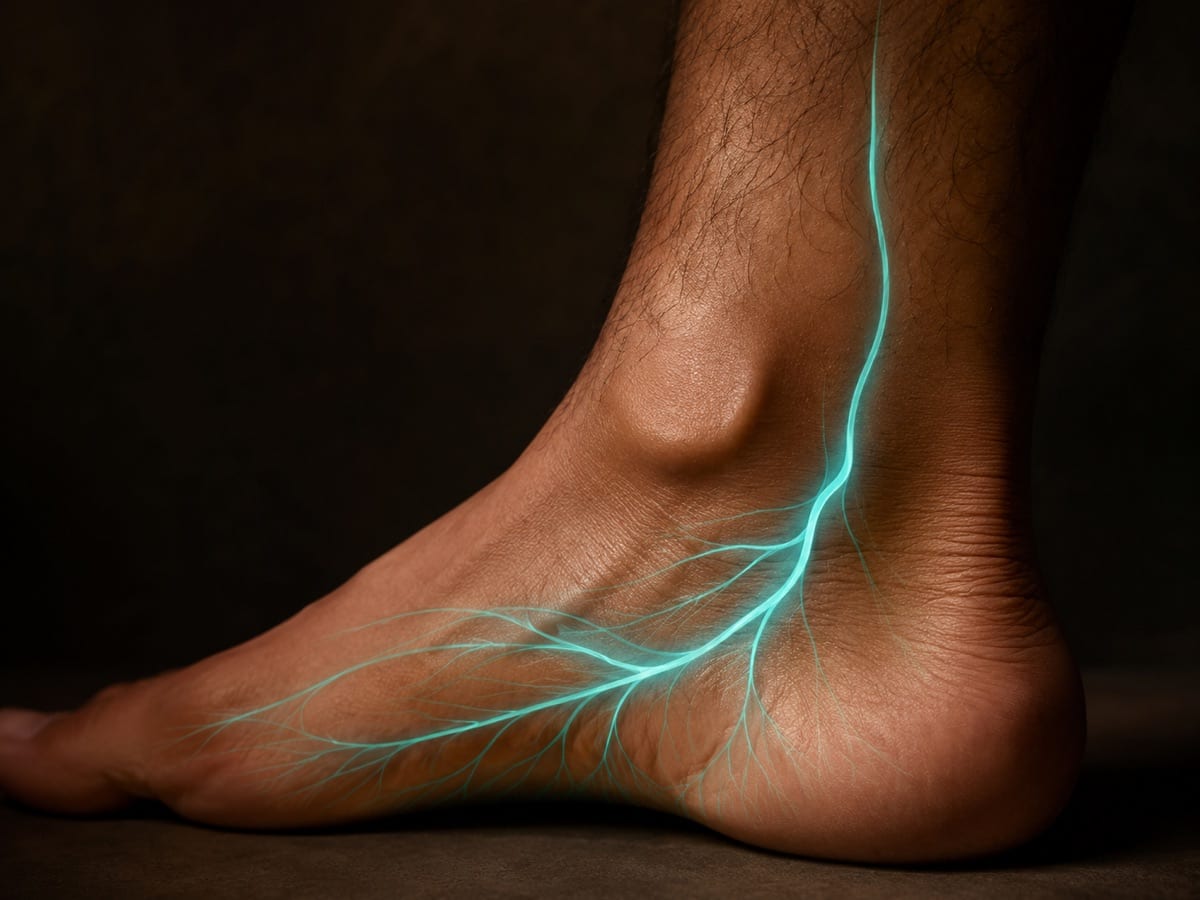
What is Tarsal Tunnel Syndrome?
Tarsal tunnel syndrome is a nerve compression problem in the ankle. The posterior tibial nerve runs through a narrow channel behind the bony bump on the inside of the ankle, covered by a band of tissue called the flexor retinaculum. When the space inside this tunnel is reduced, the nerve is squeezed and starts to send abnormal signals.
It is often described as the foot equivalent of carpal tunnel syndrome in the wrist. The compression can come from flat feet that change the pull on the nerve, swelling from injury or arthritis, a ganglion cyst or other mass inside the tunnel, or varicose veins. In many cases no single cause is found.
The symptoms usually affect the sole and can extend into the toes or up toward the heel. They tend to be worse with prolonged standing or walking and may flare at night.
Symptoms
- Burning or tingling in the sole of the foot, sometimes spreading to the toes
- Numbness across the bottom of the foot
- Electric shock-like pain shooting into the foot from the inner ankle
- Symptoms that worsen with standing, walking, or activity
- Pain that flares at night or wakes you from sleep
- A positive tap test: tapping behind the inner ankle reproduces the tingling
How We Treat It
We begin by confirming the diagnosis and finding the cause, since treatment depends on what is narrowing the tunnel. Examination of the foot and ankle, a tap test over the nerve, and where needed nerve conduction studies or imaging help us locate the compression and rule out other sources of foot pain. Correcting a contributing factor such as a fallen arch with the right orthotic support is often part of the solution.
Targeted steroid injections into the tarsal tunnel reduce swelling around the nerve and can settle the burning and tingling, especially when inflammation is driving the compression. When the pain is more neuropathic in character, a posterior tibial nerve block interrupts the abnormal signalling and gives us both diagnostic information and relief. We combine these procedures with activity modification, footwear changes, and neuropathic pain medication so the nerve has the space and the calm it needs to recover.
Related services









Tell us what's hurting.
One consultation. One coordinated team. A plan built around your case.