Procedure
Manual Therapy
Manual therapy is hands-on physiotherapy that uses skilled joint mobilisation and soft tissue techniques to restore movement, reduce pain, and improve function.
Book a consultation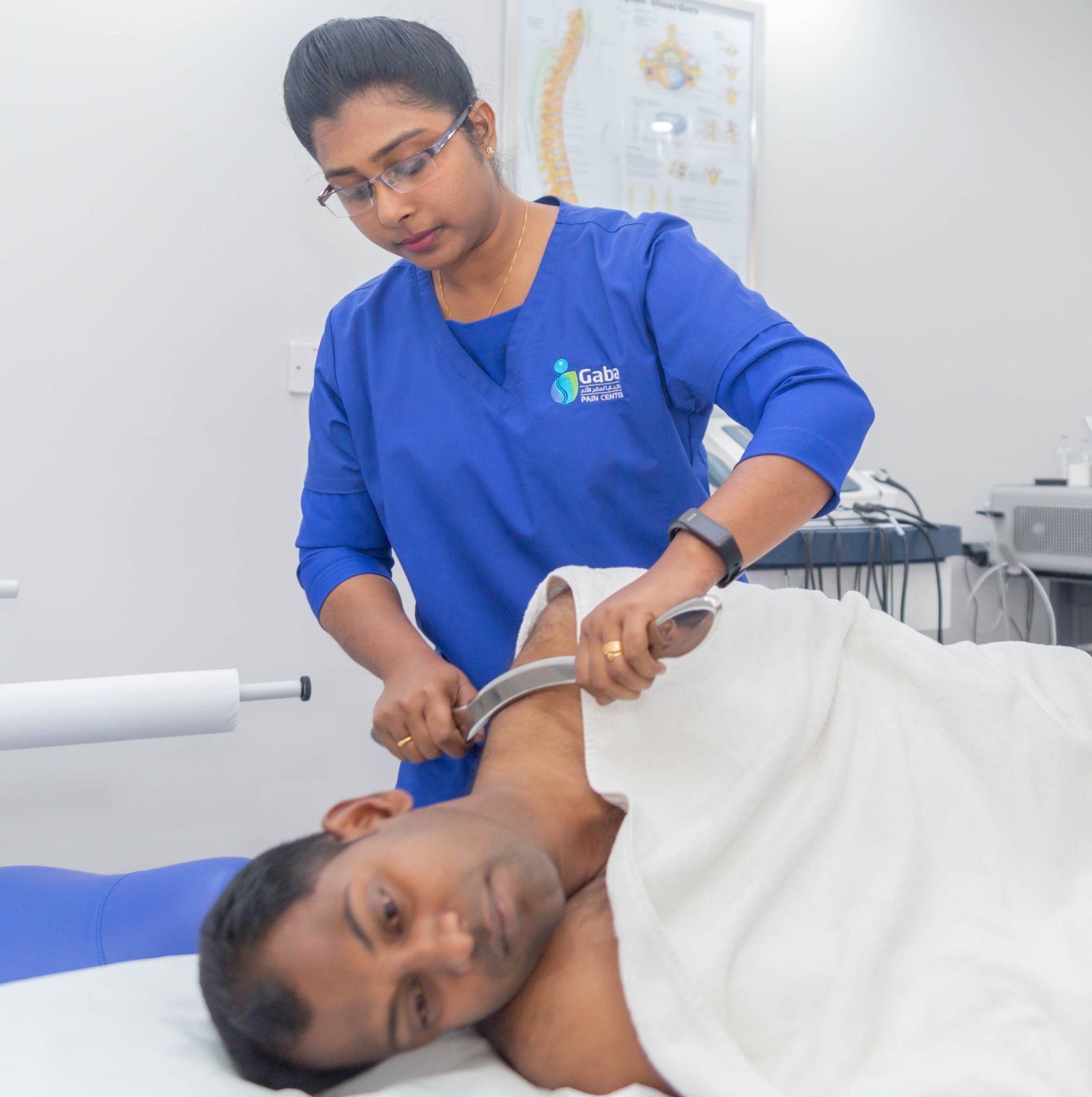
What is Manual Therapy?
Manual therapy is a specialised area of physiotherapy where the therapist uses their hands directly to assess and treat musculoskeletal conditions. The two main techniques are joint mobilisation, which involves rhythmic, graded passive movements of a joint to restore range of motion and reduce pain, and manipulation, which is a high-velocity, low-amplitude thrust applied to a specific joint to restore normal mechanics. Soft tissue techniques, including sustained pressure and muscle energy techniques, complement joint work by addressing the muscles and fascia that load the affected joints.
The effects are both mechanical and neurological. Mobilisation stretches contracted joint capsules and breaks adhesions that limit movement. At the same time, it activates mechanoreceptors in the joint that inhibit pain signals at the spinal cord level, producing immediate pain relief that goes beyond what the mechanical change alone would explain.
What conditions does it treat?
Manual therapy is well-suited to conditions where restricted joint movement or soft tissue stiffness is contributing to pain. We use it for cervical spondylosis, where stiff upper and mid-cervical segments refer pain into the head and shoulder region, and for lumbar disc pain, where mobilising adjacent segments reduces the load on the affected disc. Shoulder conditions including frozen shoulder and acromioclavicular joint stiffness respond well, as does thoracic spine stiffness that limits overhead movement. Manual therapy is most effective when combined with targeted exercise, not used in isolation.
What to expect
Before: No preparation is needed. The physiotherapist will take a thorough history and perform a movement assessment before any hands-on treatment begins. Tell us about any recent fractures, osteoporosis, or nerve symptoms such as pins and needles down the arm or leg.
During: You will be guided through positions that allow the therapist to access the target joint or tissue. Mobilisations are passive, gentle, and progressive, building in grade and range as tolerated. A session lasts 30 to 45 minutes. Some techniques feel like pressure or stretching; a manipulation may include an audible click, which is gas release from the joint fluid and is not harmful.
After: Mild soreness in the treated area for 24 hours is common, especially after the first session. Movement often feels notably freer immediately. A typical course is six to eight sessions, spaced one to two weeks apart, integrated with a home exercise programme.
Conditions this treats
Related services




Tell us what's hurting.
One consultation. One coordinated team. A plan built around your case.