
Condition
Plantar Fasciitis
Plantar fasciitis causes sharp heel pain on the first steps of the morning. It is the most common cause of heel pain in adults, and it responds well to shockwave therapy and targeted injection.
Book a consultation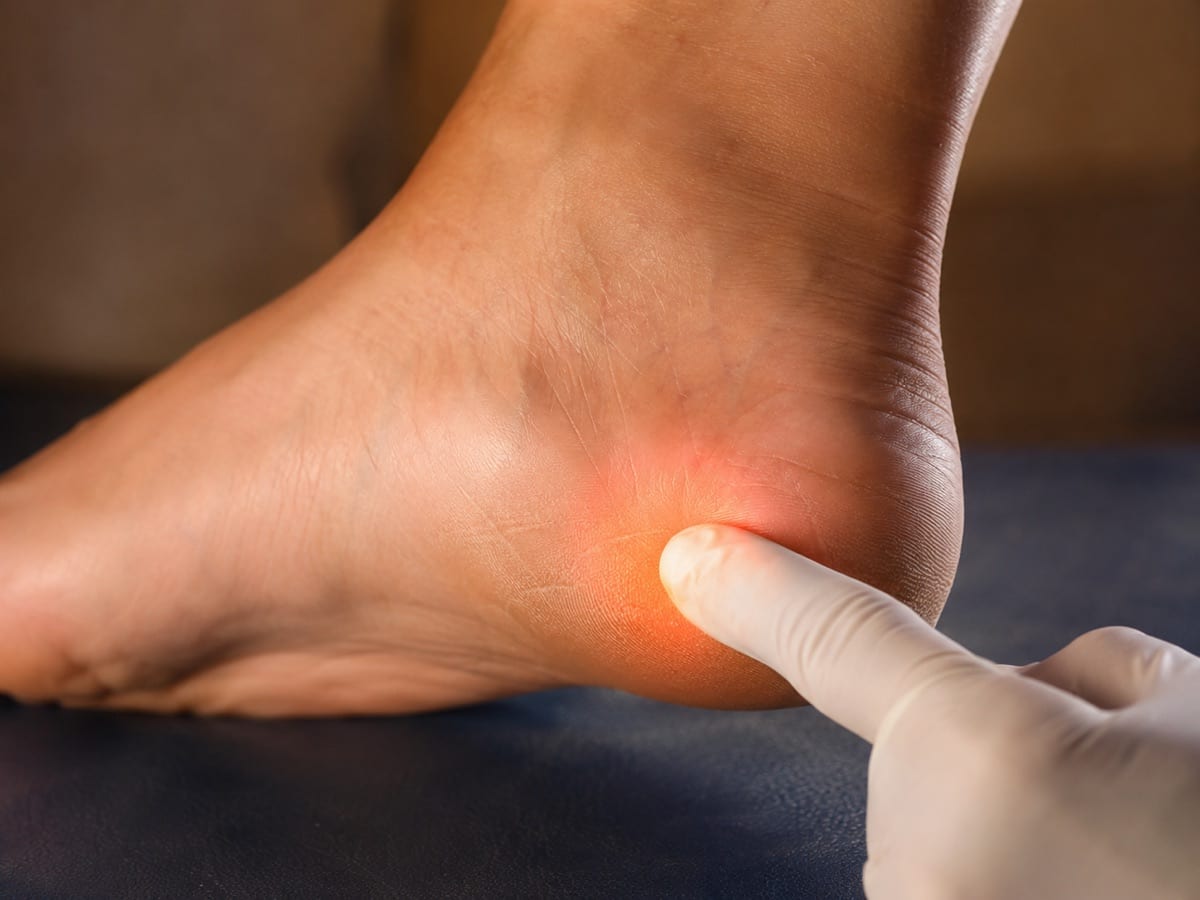
What is Plantar Fasciitis?
The plantar fascia is a thick band of connective tissue running along the underside of the foot, from the heel bone to the base of the toes. It supports the arch and absorbs load with every step. When it is subjected to repetitive stress, small tears develop at the point where it attaches to the heel, causing pain and local degeneration.
Plantar fasciitis is the most common cause of heel pain in adults. It tends to affect people who stand or walk for long hours, those with tight Achilles tendons or a high or flat arch, and anyone who has recently increased their activity level significantly. It is also more common in the 40-70 age range. Imaging is not always necessary, but ultrasound confirms the diagnosis by showing a thickened fascia at the calcaneal attachment.
The defining symptom is pain on the first few steps in the morning or after any period of rest. Paradoxically, the pain often eases with movement and returns after prolonged activity.
Symptoms
- Sharp or stabbing heel pain on the first steps after waking or after sitting
- Pain that improves after a few minutes of walking but returns with prolonged activity
- Tenderness on the underside of the heel, close to the arch
- Tight, aching sensation along the bottom of the foot
- Worsening of pain after standing for long periods
- Occasional swelling around the heel
How We Treat It
Shockwave therapy is our first-line interventional treatment for plantar fasciitis and has one of the strongest evidence bases of any procedure we use. It delivers focused acoustic energy to the fascial insertion, stimulating tissue repair and reducing pain over a course of sessions. Most people see significant improvement within 4 to 6 weeks. It avoids the structural risks that can come from repeated steroid injection into a load-bearing tissue.
When pain is severe enough to prevent engagement with rehabilitation, an ultrasound-guided steroid injection at the fascial insertion provides rapid relief to create a window for physiotherapy and stretching. For cases with clear degenerative change on ultrasound rather than pure inflammation, PRP injection at the fascial attachment promotes tissue regeneration. Stretching of the plantar fascia and calf, along with appropriate footwear advice, is essential alongside any procedure to prevent recurrence.
How we treat Plantar Fasciitis at GABA
Nerve Blocks
Nerve blocks inject local anaesthetic, with or without steroid, precisely alongside a pain-transmitting nerve to interrupt pain signals and provide diagnostic and therapeutic relief.
PRP Therapy
PRP therapy concentrates growth factors from your own blood and injects them into damaged tendons, joints, or soft tissue to accelerate healing and reduce pain.
Shock Wave Therapy
Shock wave therapy delivers focused acoustic pulses to damaged tendons and soft tissue to stimulate healing and reduce chronic pain in tendon and joint conditions.
Related conditions
Related services









Tell us what's hurting.
One consultation. One coordinated team. A plan built around your case.