Procedure
Dry Cupping
Dry cupping applies suction cups to the skin to increase local blood flow, release tight fascia, and reduce muscle pain without the use of needles or medication.
Book a consultation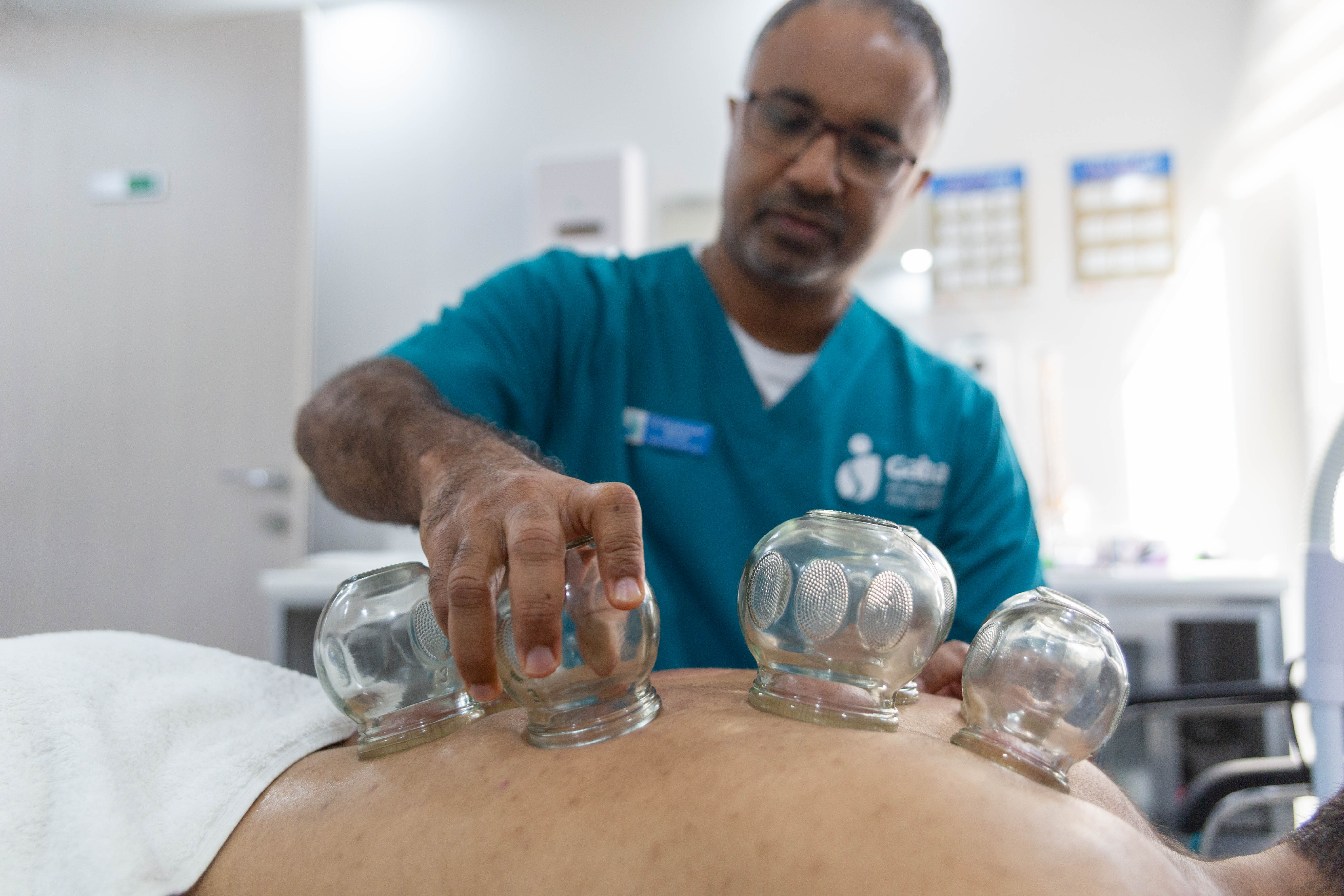
What is Dry Cupping?
Dry cupping is a soft tissue technique in which rigid or flexible cups are applied to the skin and a partial vacuum is created inside, either by heating the air within the cup or using a mechanical pump. The suction lifts the skin and superficial fascia upward, which is the opposite mechanical direction from most manual therapy techniques that compress tissue downward. This negative pressure decompresses underlying myofascial layers, increases local blood and lymphatic circulation, and stretches the dense connective tissue sheets that can restrict movement when they become adhered.
In clinical physiotherapy practice, cupping is applied for short periods of 5 to 15 minutes, often combined with gentle movement of the joint underneath (dynamic cupping) to mobilise the fascial layers through their range. Sliding cupping, where a lubricated cup is moved across the skin, combines the suction effect with a broad soft tissue release along the line of treatment.
What conditions does it treat?
We use dry cupping primarily for myofascial tightness and restricted movement in the neck and shoulder region. It is effective for the deep cervical and periscapular muscles that become chronically shortened in people with cervical spondylosis or sustained forward head posture. The shoulder capsule and posterior rotator cuff respond well to cupping as part of a wider physiotherapy programme for impingement and stiffness. Cupping is an adjunct treatment, most effective when it prepares the tissue for exercise or manual mobilisation that follows in the same session.
What to expect
Before: No preparation is needed. Avoid applying lotions or oils to the skin before your session. Tell your therapist about any skin conditions, broken skin, or blood thinning medication.
During: Oil is applied to the skin. Cups are placed on the treatment area and suction is applied. You will feel a pulling, warm sensation under each cup. The therapist may ask you to move your neck or shoulder gently while the cups are in place. Sessions last 20 to 30 minutes.
After: Circular reddish or purple marks are normal and expected. They are not bruises in the conventional sense, as no impact caused them, but they reflect increased blood flow and minor capillary expansion in the lifted tissue. They fade within 3 to 7 days. Most patients feel noticeably looser immediately after treatment. A course of 4 to 6 sessions is typical, spaced one to two weeks apart.
Conditions this treats
Related services






Tell us what's hurting.
One consultation. One coordinated team. A plan built around your case.