Condition
Meniscal Injury
A meniscal injury is a tear of the C-shaped cartilage that cushions the knee, often from twisting or sports, causing pain, swelling, locking, and a feeling of instability.
Book a consultation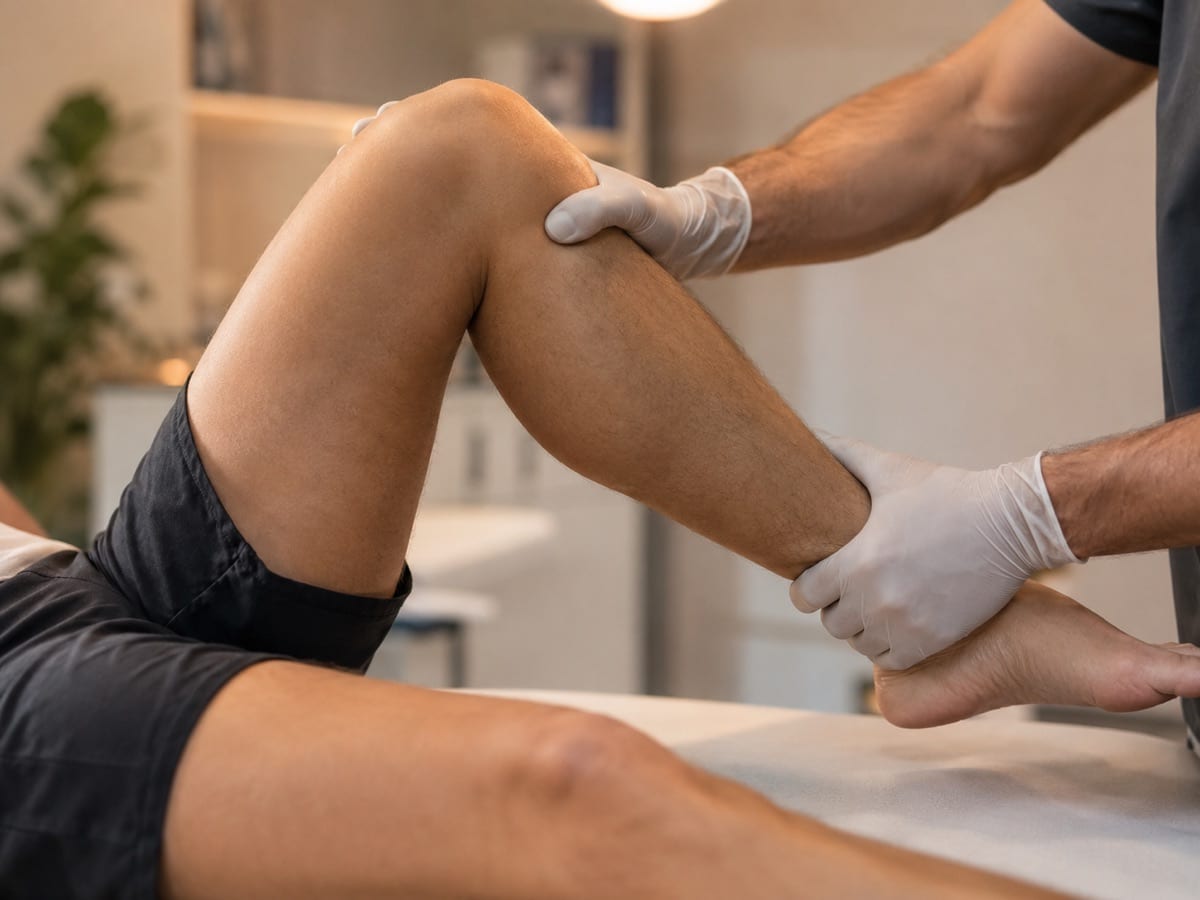
What is a Meniscal Injury?
Each knee has two C-shaped pieces of cartilage called menisci, sitting between the thigh bone and the shin bone. They act as cushions and shock absorbers and help the joint move smoothly. A meniscal injury is a tear of one or sometimes both of these structures, and it is one of the most common knee injuries in sport.
Tears happen in two main ways. A sudden forceful twist, bend, or awkward landing can tear a healthy meniscus, typically in younger, active people. With age the cartilage degenerates and weakens, so tears can develop gradually or from minor movements in older patients.
The risk rises with sports that involve pivoting, with extra load on the knee from heavy lifting or excess weight, and after a previous knee injury such as an ACL tear. Symptoms can come on at the moment of injury or build up over the following days.
Symptoms
- A popping or catching sensation at the time of injury
- Swelling, tenderness, and stiffness in the knee
- Pain along the joint line, on the inner or outer side depending on the tear
- Pain when rotating, twisting, or bending the knee
- The knee feeling locked or stuck, with difficulty straightening it fully
- A sense that the knee is unstable or about to give way
How We Treat It
Not every meniscal tear needs surgery. Many degenerative and smaller tears respond well to a structured non-surgical programme, and that is where we focus first. We confirm the diagnosis with examination, including the McMurray test, and with MRI, which is the best way to see a tear. This tells us the size, location, and type of tear, which guides treatment.
For tears with a good chance of settling, PRP therapy uses growth factors from your own blood to support healing in the cartilage and reduce inflammation in the joint. An intra-articular injection helps control pain and swelling so you can move and rehabilitate the knee. The core of recovery is a sports rehabilitation programme that restores strength, control, and confidence in the joint. When a tear causes persistent locking or genuine mechanical blockage, we will refer for a surgical opinion rather than persist with conservative care.
How we treat Meniscal Injury at GABA
Intra-Articular Injections
Intra-articular injections deliver medication directly into a joint space to reduce inflammation and pain in arthritis, injury, and other joint conditions.
PRP Therapy
PRP therapy concentrates growth factors from your own blood and injects them into damaged tendons, joints, or soft tissue to accelerate healing and reduce pain.
Related conditions
Related services









Tell us what's hurting.
One consultation. One coordinated team. A plan built around your case.