
Condition
Knee Bursitis
Knee bursitis is inflammation of one of the small fluid-filled sacs that cushion the knee, causing localised pain, swelling, and tenderness, often from repeated kneeling or pressure.
Book a consultation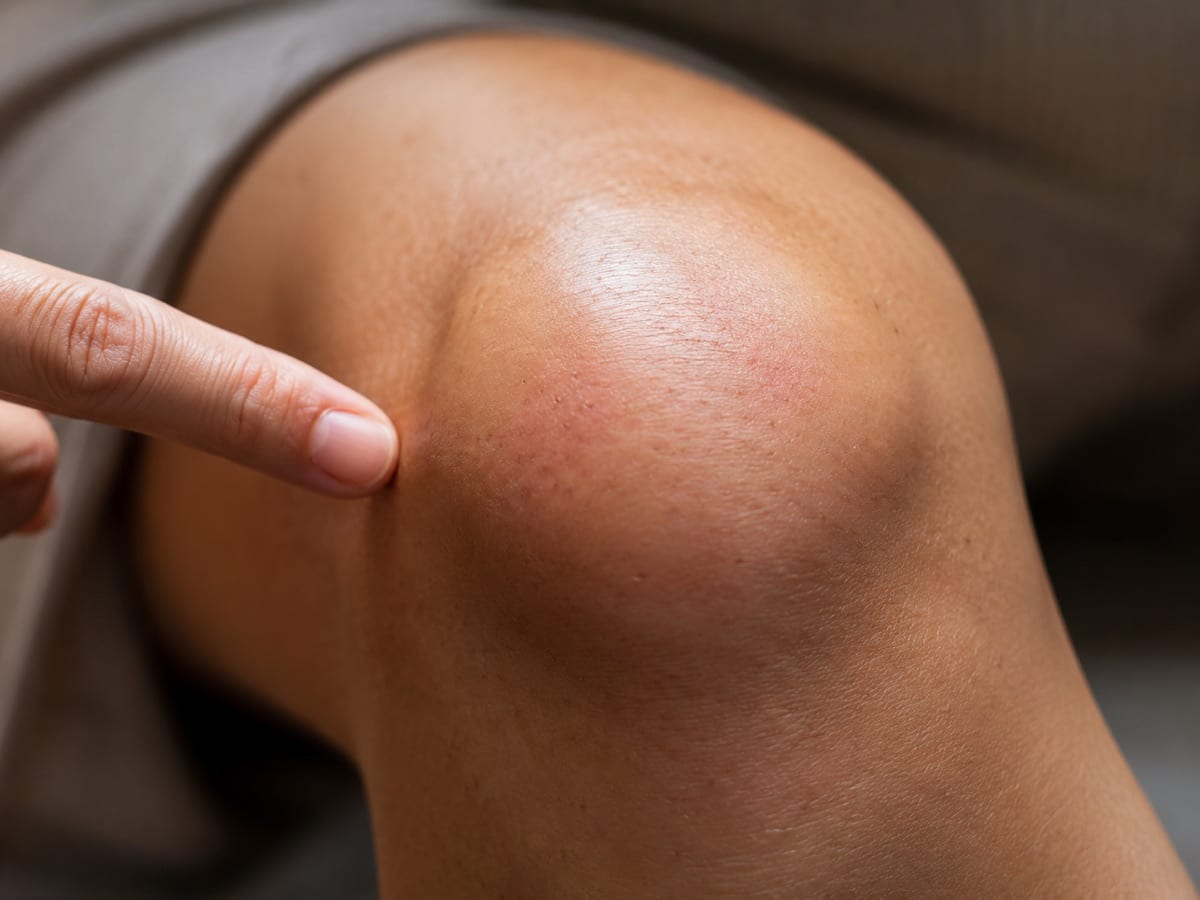
What is Knee Bursitis?
A bursa is a small fluid-filled sac that reduces friction between bone and the tendons, muscles, or skin moving over it. The knee has several of these around the kneecap and the patellar tendon. Bursitis is inflammation of one of these sacs, usually from irritation or repeated pressure, and it leads to pain, swelling, and sometimes restricted movement.
The bursae most often affected sit in front of the kneecap and just below it. The prepatellar bursa is a classic site, inflamed by frequent kneeling on hard surfaces, which is why this is sometimes called housemaid’s knee.
Common triggers are repetitive kneeling, sports such as basketball, occupations like plumbing or gardening, and direct blows to the knee. Infection, osteoarthritis, and obesity can also play a part. A direct impact can bring symptoms on rapidly, while pressure-related bursitis tends to build over time.
Symptoms
- Tenderness, warmth, and sometimes redness over the affected part of the knee
- A soft, swollen area you can often feel in front of or below the kneecap
- Pain that may be dull or sharp, during movement or even at rest
- Symptoms that develop gradually with overuse, or suddenly after a blow
- Difficulty kneeling or putting pressure on the knee
- Limited knee movement when the swelling is significant
How We Treat It
Most cases settle with rest, ice, and reducing the pressure that caused them, and we start there alongside confirming the diagnosis. Examination tells us which bursa is involved, and ultrasound shows bursitis clearly. We use imaging when needed to rule out fracture, arthritis, or a soft-tissue injury that can mimic the problem. If infection is a possibility, we address that before any injection.
When the inflammation is persistent or the bursa is markedly swollen, a steroid injection into the affected bursa brings down the inflammation and relieves the pain directly. Where fluid has accumulated, we can aspirate it at the same time. For bursitis linked to underlying joint disease, an intra-articular injection helps treat the wider problem in the knee. We add physiotherapy and advice on protecting the knee so the bursa is not re-irritated once it has calmed down.
How we treat Knee Bursitis at GABA
Intra-Articular Injections
Intra-articular injections deliver medication directly into a joint space to reduce inflammation and pain in arthritis, injury, and other joint conditions.
Nerve Blocks
Nerve blocks inject local anaesthetic, with or without steroid, precisely alongside a pain-transmitting nerve to interrupt pain signals and provide diagnostic and therapeutic relief.
Related conditions
Related services









Tell us what's hurting.
One consultation. One coordinated team. A plan built around your case.