
Procedure
Botox for Migraine
Botox injections for chronic migraine use small doses of botulinum toxin to block pain signalling in the head and neck muscles, reducing attack frequency over three to six months.
Book a consultation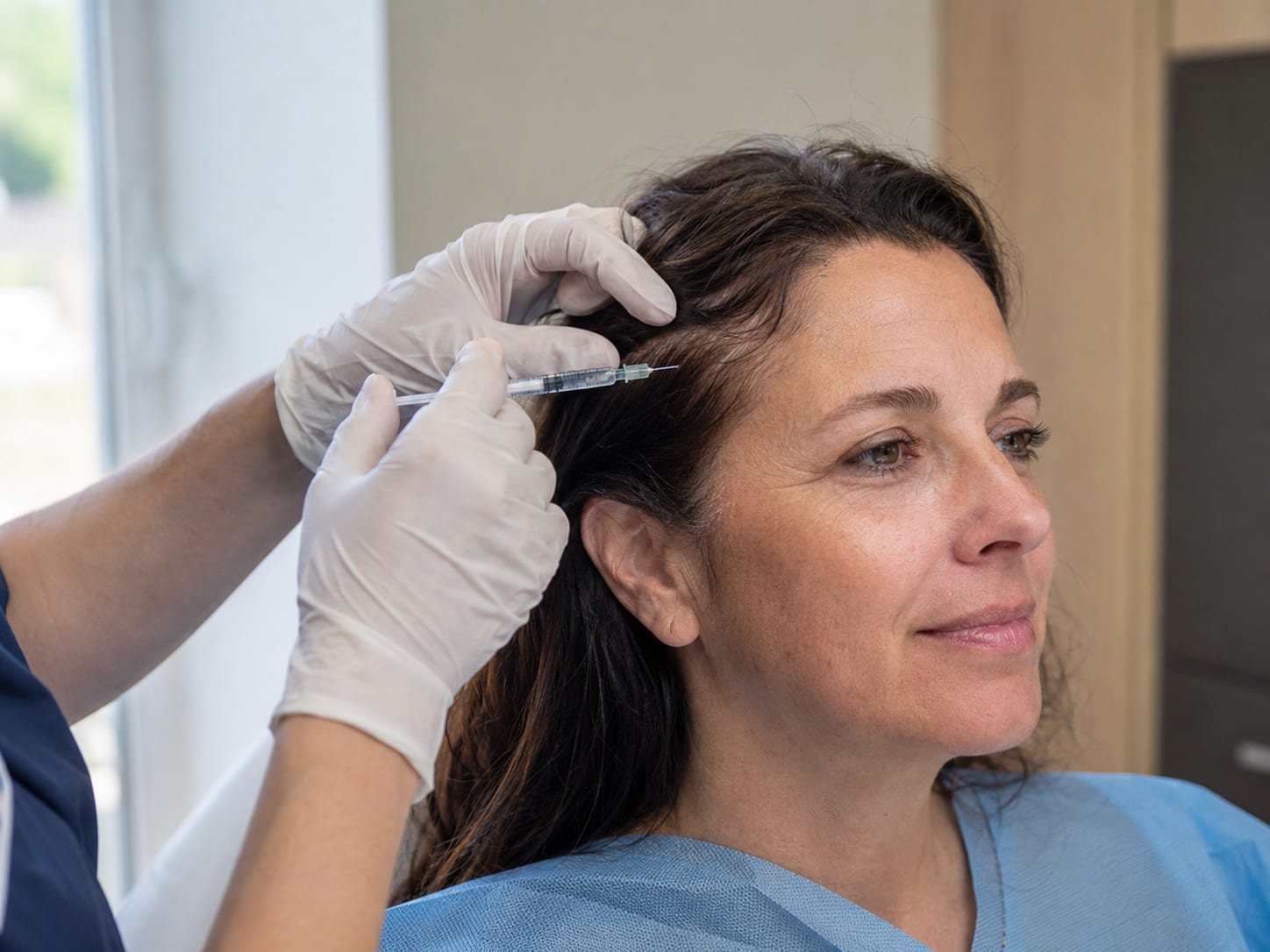
What is Botox for Migraine?
Botulinum toxin type A (Botox) for chronic migraine is a preventive treatment approved specifically for patients who have 15 or more headache days per month, of which at least 8 qualify as migraine. It works differently from how Botox works in cosmetic applications. In migraine, the mechanism is not primarily muscle relaxation: the toxin blocks the release of nociceptive neuropeptides, including substance P and calcitonin gene-related peptide (CGRP), from peripheral trigeminal and cervical nerve endings. These peptides are key drivers of the neurogenic inflammation and central sensitisation that sustain chronic migraine. By blocking their release, Botox reduces the ongoing bombardment of the trigeminal nucleus that keeps patients in a state of heightened headache susceptibility.
The protocol developed and validated in clinical trials (PREEMPT) uses 31 fixed injection sites across the forehead, temples, back of the head, neck, and upper shoulders, with optional additional sites in areas of greatest pain. The total dose per session is 155 to 195 units. The injection sites target muscles innervated by the trigeminal and upper cervical nerves, which are the primary afferent pathways in migraine.
What conditions does it treat?
The primary indication is chronic migraine, defined as 15 or more headache days per month for more than three months. It is not recommended for episodic migraine (fewer than 15 headache days per month). We also use it as an adjunct for cervicogenic headache where cervical muscle hyperactivity is a prominent driver, particularly when trigger point injections and nerve blocks have given good but short-lived relief. It is most effective in patients who have already tried at least two preventive oral medications without adequate benefit.
What to expect
Before: No fasting is needed. Tell us about any neuromuscular conditions such as myasthenia gravis or Lambert-Eaton syndrome, as botulinum toxin is contraindicated in these. Avoid blood-thinning supplements (fish oil, vitamin E) for one week before to minimise bruising at injection sites.
During: You sit comfortably while small amounts of Botox are injected across the 31 fixed sites using a very fine needle. Most injections feel like a brief pinch. The full treatment takes 20 to 30 minutes. No anaesthetic is required, though ice can be applied beforehand for comfort.
After: Mild injection site tenderness or a slight headache for 24 hours is possible. Results do not appear immediately: the treatment takes 2 to 4 weeks to reach full effect. Patients typically notice a reduction in the number and severity of migraine days from the end of the first month. The treatment is repeated every 12 weeks. Most patients see progressive improvement over the first two to three treatment cycles; the best results are usually apparent by the sixth month.
Conditions this treats
Related services









Tell us what's hurting.
One consultation. One coordinated team. A plan built around your case.